While it’s true that a lot of telemarketers are just folks trying to make ends meet, you still shouldn’t feel bad about hanging up on them in mid-sentence.
Many telemarketers aren’t actually allowed to end a call without making a sale; if they did so voluntarily, they’d be fired. By corporate edict, that call was only ever going to end in one of two ways: with you buying something, or with you hanging up on them. There’s no point trying to end the conversation politely because the script they’re working off of demands that they ignore and obstruct any attempt to do so – and they will be punished for failing to follow it.
You hanging up on them is literally the only way for them to get out of a call that’s not going anywhere, so you might as well get it over with. You’re actually doing them a favour.
Yes.
This is also an instance of a more general principle: notice when people are weaponizing social norms, and react by refusing to play the game.
Easy mode for this is the people on the street with pamphlets. They’ll weaponize social norms in an attempt to make you stop and talk to them. One script I see, for instance:
ACTIVIST: Hi! Excuse me, are you a student here?
PASSER-BY: –yes, I am.
ACTIVIST: Do you care about the ethical treatment of minorities on campus?
PASSER-BY: ….um, yes, but…
ACTIVIST: Were you aware that 90% of statistics about minorities are made up on the spot to serve as examples in tumblr posts?
PASSER-BY: …no, I wasn’t, but I really have to…
ACTIVIST: Here’s what our organization does to fight that!
…and so forth.
The trick here, of course, is that the first question is one which it’s socially unacceptable to avoid answering. If the activist opens with “would you like to help save a photogenic animal today?” you can say “no thank you.” If they open with “do you care about the whales?” you can grit your teeth and say “nope.”
But how do you respond to “are you a student here”? It’s a yes or no question, to which you definitely know the answer, so you can’t mumble something about not knowing. And it’s not explicitly related to their cause, so you can’t just automatically say “not today thanks.” (If you try either of those, they’ll call you on it – “what, you’re not a student today?”)
Ignoring them, or saying “that’s none of your business” or “leave me alone,” is a violation of social norms, and means you look like a jerk, because they asked a question that’s well within the realm of what’s socially permissible. So if you’re playing by social norms, you have to answer.
And then, once you’ve answered, you’re engaged in conversation with them. It’s an egregious violation of social norms to walk away from a conversation without going through the normal conversation-ending procedures. And they of course will not participate in those. So now you’re trapped, where you would have been free under social norms to walk past someone shouting at you about statistics if you hadn’t yet engaged with them.
The only way to escape these situations is to notice them and step outside the social game. This is hard; you will get intensethis-is-awkward, I-am-being-awful-and-mean feedback from your brain, which has noticed you are violating the rules and would like you to stop. But walking away without saying anything, or saying “I don’t want to talk right now,” is in fact the correct thing to do here.
And that’s easy mode. People selling something play this game blatantly. Hard mode is people who play it expertly, within society, so that you have to go along with what they want or be forced into violating social norms. (And people will go along with a lot rather than violate social norms.) Friends who ask you for things in a way that makes it awkward to refuse. Family members who treat you badly but do it in a way contrived so that any complaint will constitute you being rude. In the really extreme cases, the same dynamic shows up in abusive relationships. It’s the adult version of an abuser convincing a kid he’ll get in trouble if he tells his parents.
So this is, IMO, a really important skill to learn and to deploy properly. Social norms are great, I love doing the dance of social convention, it’s lovely and satisfying, but if your partner keeps trying to stab you with a poisoned dagger, maybe it’s time to stop dancing. Even if that looks weird in the middle of the dance floor.
This is something I never thought needed to be broken down before, but once you did it helped make a lot of things clear. Like, I already knew that sales people are pushy and try to rope you into conversations that are difficult to terminate, but describing the reasons why those conversations feel so awkward to leave abruptly was super enlightening.
Protip for men: if marriage is a horrifying concept for you and you think it is an evil trap, do not buy a ring and ask a woman to marry you
I’m way over seeing radical feminist bullshit on my dash. This isn’t even social justice or a real issue.
sorry that not marrying someone you dont loathe is radical feminism i guess?
women: don’t propose or get married if u don’t like the thought of marriage
men: what kind of sjw fuckery
the other bit that this implies is:
If you like your wife, act like it. Even around your friends. Be open and honest about liking your wife, liking spending time with her, and not being resentful of the shared work of building a household. Let your buddies know you can’t hang out with them because you’d rather be home with your wife, whom you like, because she is your legit bff, even though you know your buddies are gonna mock you for it.
Stand up to your buddies. Tell them mocking isn’t cool and you don’t want them to do it anymore. Challenge the other men in your life to be better men.
That is what “don’t get married if you think marriage is an evil trap” implies to men who are married. And while it’s all completely reasonable I imagine that it’s scary as fuck when it’s just so much easier to har de har har the little woman’s such a nag, ain’t she, don’t we all hate being married so much? with other men.
In that context, “don’t get married if you think marriage is an evil trap” is kindof a radical statement.
The number of guys I work with who are engaged who started pulling the “uh oh, life over soon, har har” shit that I have completely shut down with a simple “well if you don’t want to get married, then don’t”…*sigh* And they’re just like, hem, haw, welllll if I don’t then she might not stay with meee, which I respond to with “well, sounds like you need to have a pretty serious and honest conversation with your fiancee about your feelings then” and then the *panic!* look…When you remove that easy “hah hah ball-and-chain” narrative, watch the reaction. Some of them (to a female friend) will mumblingly admit that they love their fiancee and are excited to be married. Others…all you get is fear.
That’s the disservice we do men by refusing to teach boys how to explore their emotional needs. It hurts everyone. I watched three male friends walk into marriages I can tell they weren’t ready for and didn’t want, just because it was expected and they had no tools for emotional self-examination. Two of those marriages are (shockingly) in crisis, a couple years later. One has kids involved now. It’s more than a little heartbreaking. The marriages I see that are working? Are the guys with the emotional maturity to talk to their wives and who don’t care if everyone knows they’re in love with them.
SERIOUSLY.
My friend is getting married this summer and when I congratulated her fiance on their engagement he said to me “Yeah well you know, women. This is what they want so you have to bite the bullet.” and my other friend’s husband who was sitting next to him laughed and agreed. If this is how you feel, don’t get married. Don’t propose. Just…. Don’t. Do it. Any of it.
Straight people think that doing things you really don’t want to do – like marriage and having kids – is normal cos they’re still stuck in a fucking 19th century mindset.
It’s why I know my best friend got a good one, he’s open about how much he loves her and he’s excited to be getting married and regularly contributes ideas and has his own input, it’s nice to see
It filters through as well. Even being gay, a lot of my straight friends don’t understand why I spend so much time with my husband. Because I love him? Because I enjoy his company? Because he’s my best friend? I can’t count the amount of straight people that have told me that they think it’s “weird” that my husband and I spend so much quality time together. The only person who understood was my mom, whose response was: “If you love someone and genuinely enjoy their company, why WOULDN’T you want to spend your free time with them?!”
How can anyone look at their impending marriage and think ‘oh no, it’s all over now’ like???? I’ve only felt so close to so many people in my life, but those small few were like?? I’d wake up in the morning excited to be awake just to look forward to SEEING them. I’d catch myself with this stupid idiot grin in broad daylight just THINKING ABOUT BEING AROUND THEM. I’d sleep easy with them in my head, shitty days became perfect once I spoke to them. THAT’s how I imagine feeling again someday. I think about feeling that way for someone again and it’s like the whole future opens up. Marriage is finding your best friend in the whole wide world and wanting to have a sleepover every single day, and to agree to it and then go around groaning like your freedom is being stolen is a HUGE disrespect. If you have the freedom to share your life with anyone you like and you throw it around like baggage you really can’t expect it to grow, can you? You gotta care about yourself a little more than that I think
All of this.
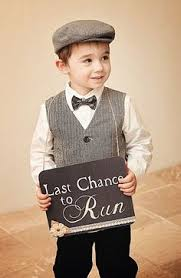
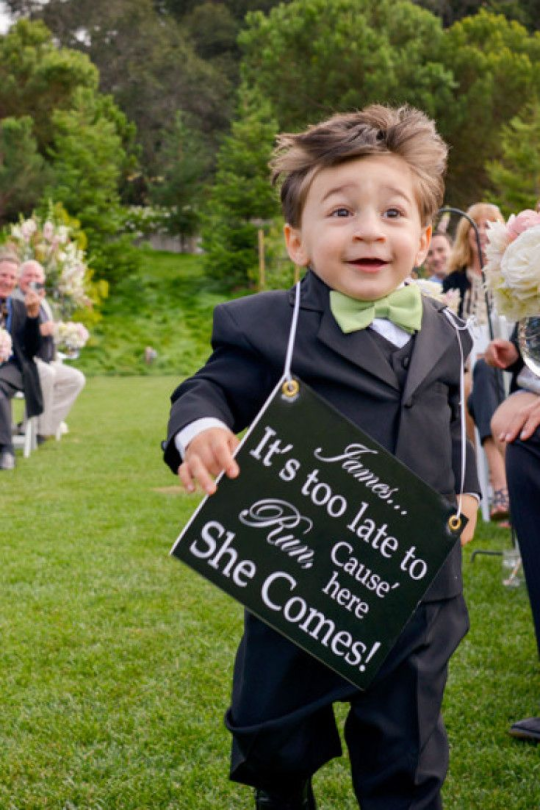
Not to mention this mentality makes it’s way TO THE DAY OF THE WEDDING. How many weddings have we seen with something like this:
Like what kind of toxic mentality do you have to have to say this as the bride is about to walk down the aisle and marry someone who it’s now suggested doesn’t even want to be there?? How is this cute? How is this supposedly charming? This is supposed to be the person you love and want to be with! And not to mention that you send this down the aisle with a small child (the ring bearer or the flower girls)…I have a special loathing for things like this.
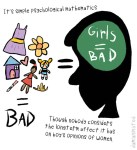
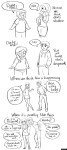
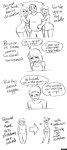
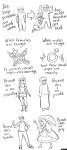
At Target this lady told her son he couldn’t have a Wonder Woman doll because “that’s for girls” and then bought her daughter the same one. It got me thinking about how often I see people bar young boys from appreciating girls/women as protagonists and heroes, and my own experience with it as a kid.
The scene on Endor is so important to me for many reasons but one of them is that in it, Han Solo apologises. Which marks one of the very few times that I’ve seen a male character apologising for getting jealous of his own volition, not because he got yelled at or anything, but because he realised that Leia was upset and that this was not the time for him to get petty and stupid over his own insecurities, and I love that.
Because jealousy is so often portrayed as a funny or even romantic thing, a sign that the guy is in love or whatever, when in fact, jealous behaviour is almost always hurtful or even controlling behaviour. As an instinct or reaction, it’s very human and understandable, but when I see characters acting jealously, I see them acting in a way that’s possessive, manipulative, controlling, hurtful, and ultimately, lacking in trust. No one ever does nice things out of jealousy.
Here’s the thing: who Leia falls for is her choice. Who Leia trusts and confides in is her choice. Who Leia has a relationship with is her choice. And Han knows this. He gets momentarily jealous and annoyed because he’s been away from her for a year and he’s scared of losing her and maybe she doesn’t care as much as he does, and they’re back to fighting, and he doesn’t know what to do about any of it. He tried asking her outright, and that didn’t work, and that’s Han out of ideas. Not like Luke, who’s good at this emotional stuff, damn him anyway. But then Han realises very quickly that Leia’s upset, and he’s being petty and unhelpful and making everything worse. Luke just left, and whatever he is to her, whatever they said to each other, Leia is upset.
Leia, obviously, doesn’t really care about love triangles right now. Leia has just had several major revelations, she has a brother, she has a father, they might kill each other, and she’s also in the middle of a life-or-death mission. What Leia needs right now is just someone to be on her side, not demands for answers or petty jealousies. She doesn’t want to talk about it. She needs to process it all first.
So then it’s Han’s choice whether he storms off in a huff because she’s not putting him first, or turns back to comfort her because he’s putting her first.
He chooses the latter. He chooses her. He puts his jealousy and his insecurities to the side, he swallows his pride, he apologises for losing his temper and being an idiot, and he doesn’t try to offer an excuse or explanation or justification for it, either. He just says “I’m sorry” and stands there, saying nothing, making it clear that he’s here for her in whatever way she needs. Putting her first. No expectations. Because he has no idea what Leia needs or wants right now so he’s decided to just give her a chance to tell him.
He’s also made himself vulnerable, because you know that between these two, an apology is a Big Deal, a major score for the other side. But what it also means is that Leia can now turn to him for comfort, because he’s being sincere, so she can be, too. You can tell it surprises Han, because of course he didn’t even realise he was doing it right, but unlike their earlier fights, this one ends well because what do you know, a relationship is about trust and consideration and putting each other first.
The point is: Han realises that he’s being an idiot, he apologises for it, he doesn’t make excuses, and he doesn’t demand any particular reaction to it. It’s a genuine apology and it’s given, with no expectations or conditions attached, for a behaviour that’s romanticised far too often. It turns the “jealous lover” trope around and puts the romance where it ought to be: in the apology, aka the act of genuinely putting the other person first.
You are not your parents puppet. You are not your parents possession. You are not your parents toy.
You do not owe your parents your entire life. You do not owe your parents your happiness. You do not owe your parents the life they wanted.
You do not need to meet your parents standards. You do not need to sacrifice things for your parents. You do not need to conform to their morals.
You do deserve happiness. You do deserve to be free. You do deserve to be yourself. You do deserve to do what you wish in life.
Do not let your parents define who and what you are.
Do not let your parents define who and what you are.
Do not let your parents define who and what you are.
This isn’t even just for abusive parents, don’t let your parents stop you from becoming who you want to be even if you have a fantastic relationship with them.
You are not your parents puppet. You are not your parents possession. You are not your parents toy.
You do not owe your parents your entire life. You do not owe your parents your happiness. You do not owe your parents the life they wanted.
You do not need to meet your parents standards. You do not need to sacrifice things for your parents. You do not need to conform to their morals.
You do deserve happiness. You do deserve to be free. You do deserve to be yourself. You do deserve to do what you wish in life.
Do not let your parents define who and what you are.
Do not let your parents define who and what you are.
Do not let your parents define who and what you are.
This isn’t even just for abusive parents, don’t let your parents stop you from becoming who you want to be even if you have a fantastic relationship with them.
another reminder that a character being attracted to more than one gender does not automatically mean they’re canonically bi. if they haven’t been labeled, then they haven’t been labeled. headcanons are one thing, but erasing pansexuality, which is what not even considering pansexuality as a possibility is, in your quest for bi rep, is not okay.
When the Nazi concentration camps were liberated by the Allies, it was a time of great jubilation for the tens of thousands of people incarcerated in them. But an often forgotten fact of this time is that prisoners who happened to be wearing the pink triangle (the Nazis’ way of marking and identifying homosexuals) were forced to serve out the rest of their sentence. This was due to a part of German law simply known as “Paragraph 175” which criminalized homosexuality. The law wasn’t repealed until 1969.
This should be required learning, internationally.
You need to know this. You need to remember this. This is not something to swept under the carpet nor be forgotten.
Never. Too many have died for the way they have loved. That needs stop now.
Make it stop?
I did a report on this in my World History class my sophomore year of high school. It was incredibly unsettling.
My teacher shown the class this. Mostly everyone in the class felt uncomfortable.
I have reblogged this in the past, but it is so ironic that it comes across my dash right now. I a currently working as a docent at my city’s Holocaust Education Center (( I say currently because I’ve also done research and translation for them )) and out current exhibit is one on loan from the United States Holocaust Memorial Museum ((USHMM)). This is a little known historical fact that Paragraph 175 was not repealed after the war and those convicted under Nazi laws as a danger to society because they were gay were not released because they had be convicted in a court of law. There was no liberation or justice for them as they weren’t considered criminals, or even victims for that matter. They were criminals who remained persecuted and ostracized and kept on the fringes of society for decades after the war had been won. Paragraph175 wasn’t actually repealed until 1994. And it was only in May 2002, that the German parliament completed legislation to pardon all homosexuals convicted under Paragraph175 during the Nazi era. History has forgotten about these men and women — please educate yourselves so this does not happen again. Remember this history. Remember them.
@mindlesshumor ok how the fuck did I miss this when I’ve studied The Holocaust like nobody’s business??? wtf
Because the history we have left regarding it is literally the contents of this first hand account.
It is a thin little book.
When I first opened it, I wondered why it was so thin.
Why there wasn’t other books like it.
Other first hand accounts.
By the time I finished it, I didn’t wonder anymore.
Bent by Martin Sherman (fiction; however, it’s often credited with bringing attention to gay Holocaust victims for the first time since the war ended)
This is one of the memorial sculptures in Dachau. It was erected in the early 60s and is missing the pink triangles. Because in the early 60s, homosexuality was still a crime in most of the world. Our tour guide explained why the pink triangles have not been added later – if they were, then folks would assume that they had always been there. This way people ask “why aren’t there pink triangles?” and somebody can explain why – because in some ways, the rest of the world was as bass-ackwards as Nazi Germany.
can i just say i was literately in a genocide and holocaust class and i didnt even learn this
If a child is overwhelmed, remove them from the overwhelming situation.
If a child is hungry or tired, address those needs.
If they are throwing a tantrum in the department store, take them somewhere quiet and let them cry until they are calm. They’re probably just bored or cramped or overwhelmed and need a minute.
Address the cause of misbehavior, not how it manifests.
Make sure things like transitions, when you are leaving or moving on, are clearly communicated. Sudden transitions can be a huge trigger for tantrums. Best to try and mitigate with proper advance notice.
Explain your reasons to children when you are enforcing rules
Listen to children when they explain their objections to rules. You don’t have to agree with them all the time, but you should listen.
Understand that you, the adult, can also be overwhelmed, tired, hungry, and frustrated too. Acknowledge, to your kids, out loud, how these things are impacting you and apologize if you snap at them unfairly. Again, this is modeling emotional response.
Make the rules clear, simple, and consistent. Don’t change what the rules are based on your mood that day, or if you must, explain it before hand. If you normally let them play video games in the car, but you can’t today because your head hurts and your driving to a new place and you need to concentrate so you don’t want the sound to distract you- explain that to your kids. If they counter with “I have head phones. Is that ok?” Then, yeah. It’s ok.
If you need to have consequences for their actions, then actually follow through. Don’t threaten with consequences that you won’t really do. That makes it a lie, and makes it super ineffective in the future.
Make consequences fit the behavior. Explain why that is the consequence.
Some good consequences might include: cleaning up a mess they made, taking a cool down time for a few minutes, not getting to a special treat like a trip to the movie theater with their friends, etc. Remember, we are trying to avoid physical pain as a form of punishment.
Speak to children respectfully and prompt them to speak respectfully back.
Choices. Give kids a reasonable, manageable number of choices. Do you want to wear the green shirt or the blue shirt? Do you want Cheerios or waffles? Carrots or green beans? Do you want to give grandma a hug or a high five? Older kids can handle more choices than younger ones.
General rule of thumb: You aren’t trying to raise an obedient child. You’re trying to raise a thoughtful, respectful adult. And you have to be a role model, not just in what you say, but also in what you do.
















 JainaSolo1994